
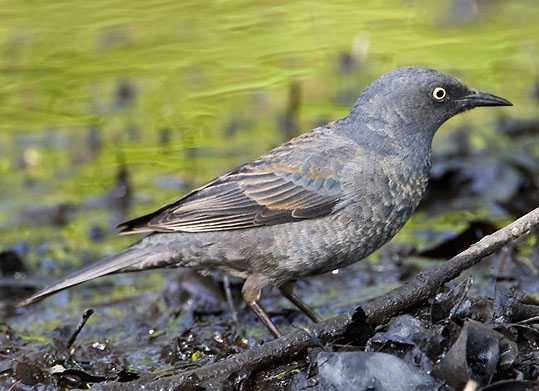
Beginning Saturday, wildlife biologists statewide will be watching the skies in search of a bird in dramatic decline. They are hoping to get more help to report sightings.
Audubon Alaska, a conservationist society out of Anchorage, is launching the Rusty Blackbird Spring Migration Blitz from April 12 to May 31. The project, in coordination with the Alaska Department of Fish and Game, is encouraging anyone to log bird sightings in eBird, a datasheet that could help biologists understand factors that have landed the Rusty Blackbird in the red on the 2010 Alaska WatchList.
The Rusty Blackbird is a boreal perching bird, which migrates back to Canadian forests and Alaskan wetlands in the spring. The species has seen a 90 to 98 percent decline in global population since 1966, according to the Audubon Alaska WatchList.
The population dropped from 13 million in 1965 to 2 million at the last report in 2010, a declining rate of 5 to 12 percent each year. Nearly 30 percent of the Rusty Blackbird population resides in Alaska.
David Tessler, a Regional Wildlife Biologist with the Fish and Game diversity program, said there is not a lot of information to explain why the Rusty Blackbird population has dropped. Hopefully the data obtained from the blitz will provide more answers, he said.
“We are looking for basic help to figure out where they migrate and when so we can better protect their habitat for survival,” he said. “As biologists we can only do so much, so if we can get more eyeballs out there and get people to report observations, we can determine what we can do about the decline.”
Tessler, who has studied the Rusty Blackbird for the past six years, said several factors contribute to the loss in population including winter migration habits and climate change. Reports of the bird flying with large flocks of different black birds to agricultural areas in the south and could have deemed the bird an agricultural pest, which could have been subjected to controlled poison from farmers, he said.
While the Rusty Blackbird is now is extensively protected, changes in winter migration habitat from forests converted into farmland and mercury accumulation in river systems on breeding grounds could explain the population decline, he said.
“There are a number of hypothesis’s, but no smoking gun,” he said. “Several contributing factors at different times or often together. It is an issue we can’t unravel.”
Tessler said the blitz project is in partnership with the International Rusty Blackbird Working Group, which formed in 2005. The decline became apparent 10 years ago and since then a continent-wide program started with every state and province on a different timeline for bird reports.
In Alaska, the biologists predict the Rusty Blackbird will return to the state between mid-April and early May. Tessler said it is unclear where the bird’s highest density areas are and at this point none exist because they are thinly distributed throughout the state during breeding season. Todd Eskelin, wildlife biologist for the Kenai National Wildlife Refuge, said the Rusty Blackbird is one of several species that have taken a noticeable hit in population. The Olive-sided Flycatcher, a perching bird and Red-necked Phalarope, a wetland bird, have fallen in the same category.
He said the best thing people can do to help is to continue to put information of bird sightings in eBird, a program he uses to track different species on the Kenai Peninsula.
By accessing the database, he said users have many ways to look at data that wasn’t available a decade ago. People can report when a bird arrives, departs, the nesting location, how many have been reported and he said he can filter the information to track specific species.
Eskelin said six years ago he encountered a family of Rusty Blackbirds at Headquarters Lake, but last year was the first year he didn’t see them nest there.
“They like to nest next to a lake or boggy area typically found in black spruce forests,” he said. “By collecting data we can determine what habitats they need so we can do our best to protect them.”
Eskelin said new technology tools like geo locator devices allow biologists to figure out where birds travel. While there may not be a high density of Rusty Blackbirds in the Kenai Peninsula, the area has plenty of features the bird finds attractive for breeding grounds. Typically, they would return to the same area each year. The wildlife refuge organizes several bird watching events like the Kenai Peninsula Birding Festival from May 15-18. The Kenai Wildlife Viewing Platform on Beach Access Road is a popular spot for birders, he said.
Tessler said people who go out bird watching and don’t see the Rusty Blackbird, should report that as well. Bird sightings can be entered online in eBird or a print out datasheet from Fish and Game.
Reach Dan Balmer at daniel.balmer@peninsulaclarion.com
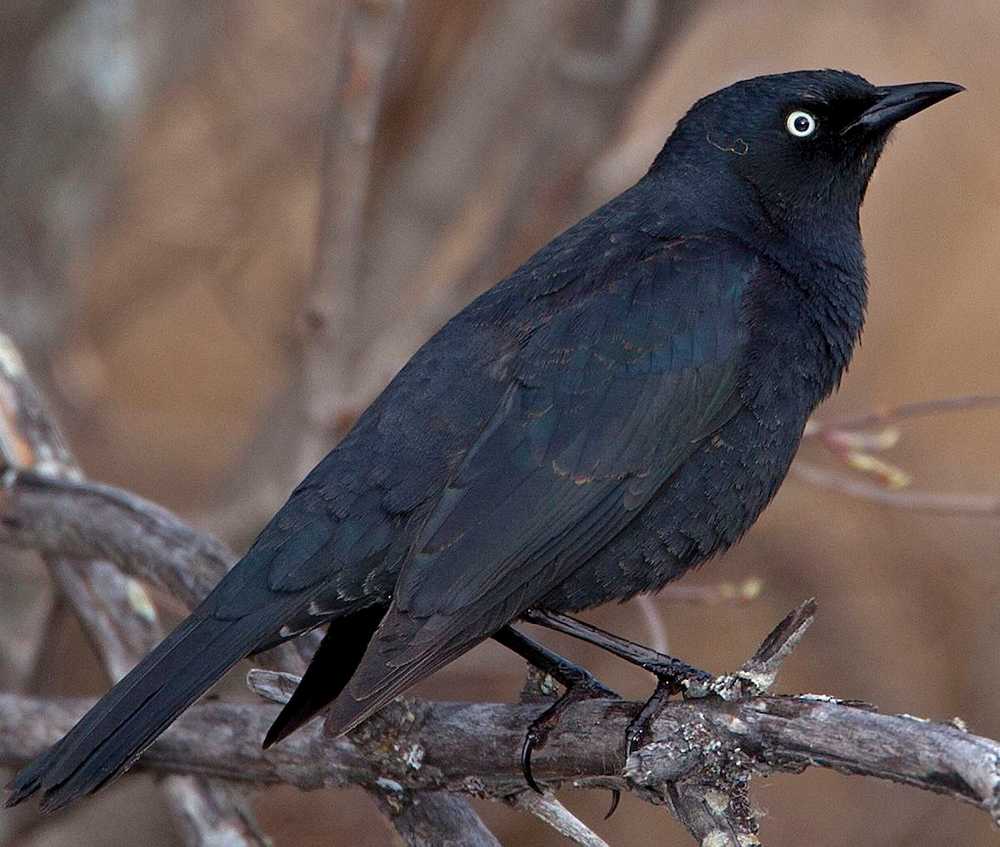
Photo by Daniel W. Clark This photo provided by the Alaska Department of Fish and Game shows a male rusty blackbird.
