
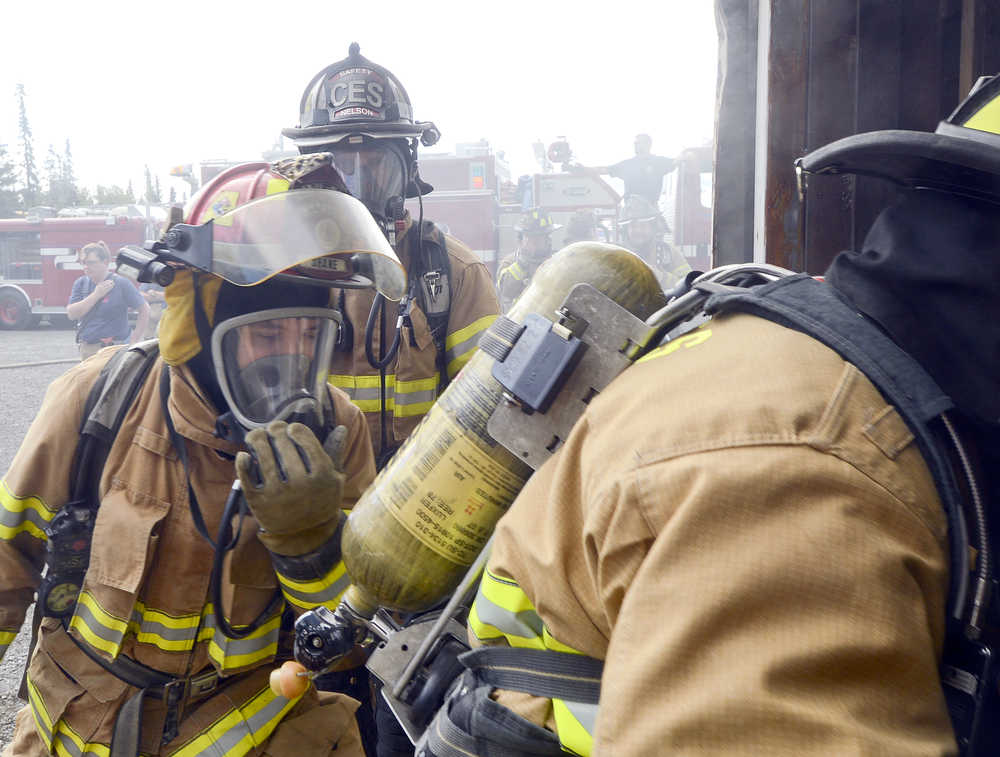
If all goes as planned, the central Kenai Peninsula should see a surge in the number of personnel responding to fires and medical emergencies.
Central Emergency Services launched a campaign to recruit volunteers in a effort to triple the department’s current volunteer staffing. CES has struggled to keep more than one person at a time at some of the outlying stations in its 1,000 square mile fire service area, and is estimated to be at minimum staffing for about 85 percent of the year according to department data.
For Funny River and Kasilof, that can mean a greater response time to fires or emergency situations where more than one person is needed to be effective.
“We don’t really want less than two people per station,” said Fire Chief Chris Mokracek. “We’re not going to be reducing staffing at these stations, or closing stations or having no one there. We want community responders.”
The push for volunteers came after CES administration looked at its on-call and volunteer program and realized that implementation of the Affordable Care Act mean that some of the department’s non-staff personnel would have to be offered health insurance.
“Under the ACA, if they exceeded 30 hours in a week, then you had to start to look at offering health care benefits,” he said. “It really started muddying the waters.”
So, CES hired retired CES captain Dick Kapp as the volunteer coordinator and launched a campaign to revamp its volunteer program. Under the new program, CES is looking for people to live in some of its remote stations and others to be on-call but not residents in the fire stations.
Kapp said each volunteer will be trained to the basic firefighter level, as an emergency trauma technician and as a driver and operator. They’ll be paid a stipend for each training and shift that they cover.
The result should be more personnel and fewer overtime hours for current firefighting staff, Mokracek said. Currently firefighters are averaging about 58 hours per week, according to CES data.
“We can bring on volunteers without any kind of drastic increase to the budget,” Mokracek said. “Right now when you look at the staffing situations, nationwide and statewide and on the staffing level, we can’t afford to just go to the assembly and say ‘we need nine more career firefighters.’ We need to start being creative because those alternative revenue sources from the state and federal government are shrinking.”
Kapp stressed that volunteers shouldn’t expect to make a living off the stipend they’ll make with CES, but that the training would be a draw to people who wanted to continue on as firefighters.
“The hands on training is huge,” he said. “That’s invaluable on a resume.”
For live-in personnel, Kapp said the department would likely require a one-year contract.
“They’ll live in a fire station, be assigned to a shift, respond to calls and the payoff for that is they get free boarding and also education,” he said.
After two to four months of training, the live-in volunteers will likely be put in the stations that have the least staffing, those in Funny River and Kasilof.
“These stations where we’ve had the one-man stations, where we’ve had that issue, now we can provide residents there with more staffing for calls,” Mokracek said.
The CES program is an adaptation of several that are in place in other areas of the state and country where fire departments deal with large fire services areas and relatively few staff to respond to calls. Kapp said CES looked at remote fire stations near Fairbanks and in Washington and Colorado for inspiration.
“Basically we just picked off the best parts that applied to us and then we’re going to fill in the blanks,” he said.
Chena Goldstream Fire and Rescue Chief Jack Willard said his department uses volunteers and live-ins and scholarship students from the University of Alaska in Fairbanks to cover a lot of its calls.
“We have some non-scholarship volunteers that are strictly live-ins … they pull 10 shifts per month and for that, they get to stay in the station for free,” he said.
The volunteer staff and live-ins help the department respond to emergencies during times when there aren’t enough staff at the stations to respond to all of the calls.
“Say it’s 9 p.m. at night and the tones go off on a structure fire, we call all of the people on duty and then anyone who is available —that way we can get the manpower we need. A lot of times we’ll end up with four or five people that are not on the calendar but they’re on anyway because it’s a structure fire,” he said.
Willard said the piecemeal staffing was something that a lot of remote fire departments worked with.
“The population density just isn’t like what it is in the lower 48 so we end up covering a larger area with a smaller population and it just makes us more spread out,” Willard said.
While CES will continue taking applications year round, Kapp said the current push for volunteers will end in early February. Then, the new recruits will dive into the approximately 150 hours worth of training required for completely new recruits, though several applicants have already been through firefighter training and will require significantly less training, Kapp said.
The addition of volunteers to CES staff should boost the department’s response to calls that happen in Soldotna and its core area.
“We have to do something because we’re growing,” Mokracek said. “We’re looking at the potential in the north road and everything that’s going on in Nikiski and everywhere you look there’s construction going on. The hospital has a new addition and we’re this hub of activity for the peninsula. We want to be ahead of the curve.”
Reach Rashah McChesney at rashah.mcchesney@peninsulaclarion.com or follow her on twitter @litmuslens
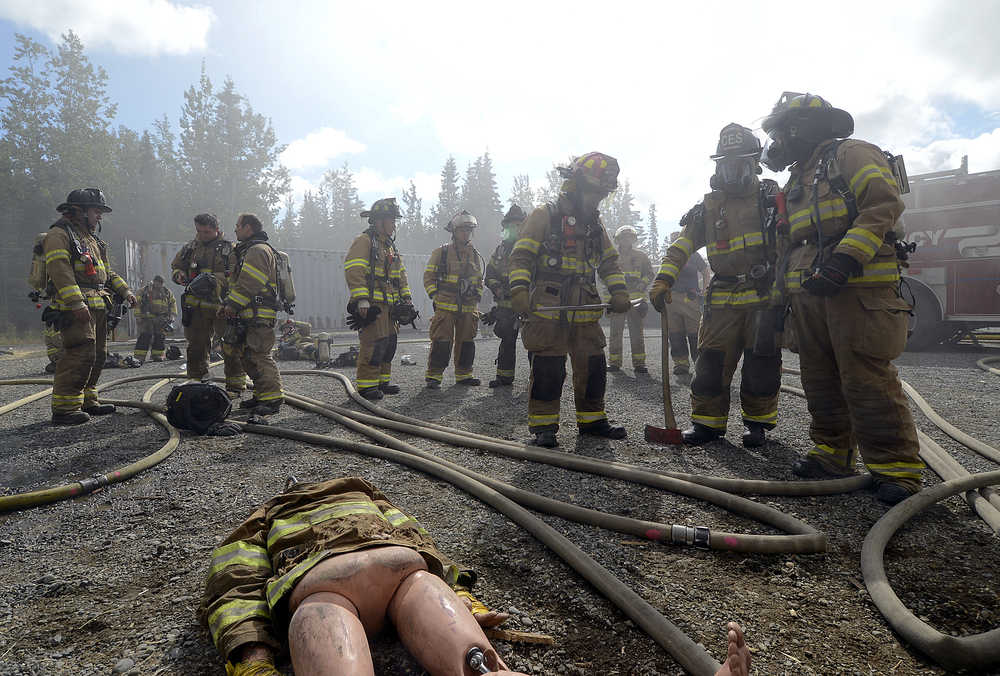
Photo by Rashah McChesney/Peninsula Clarion Central Emergency Services firefighters head into a burning training building Wednesday August 6, 2014 in Soldotna, Alaska.
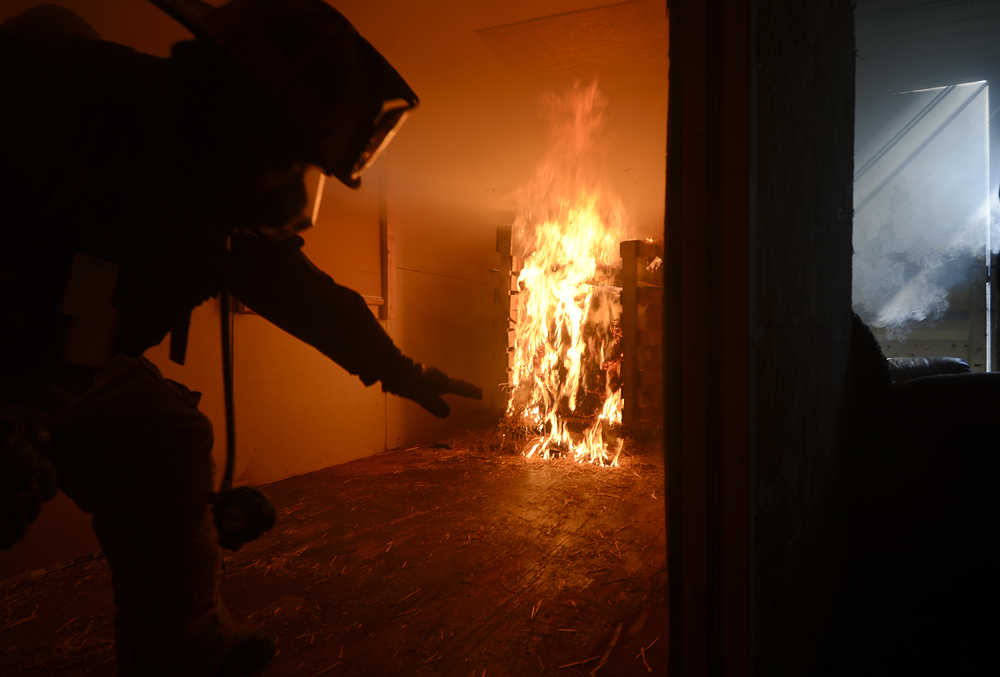
Photo by Rashah McChesney/Peninsula Clarion In this August 6, 2014 file photo, a firefighting trainer talks about the way that smoke behaves during a day of training drills at the Central Emergency Services training facility in Soldonta, Alaska. CES recently launched a campaign to add volunteer firefighters to its force. The department aims to triple its volunteer staffing and add more personnel to each station.
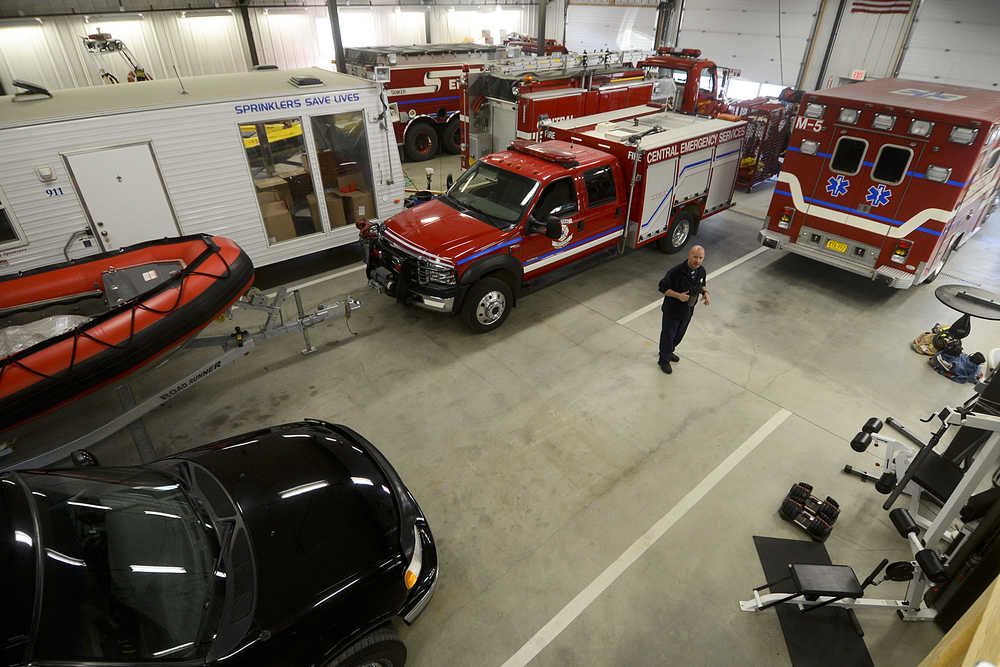
Photo by Rashah McChesney/Peninsula Clarion Central Emergency Services firefighter Sam Evanoff runs through his morning routine at the Funny River Fire Station on May 1, 2014 in Funny River, Alaska. CES has struggled to maintain staffing at its () stations and Evanoff worked a shift alone at the remote station. The department recently launched a volunteer program which aims to triple its volunteer base and add more people on each shift to its outlying stations.
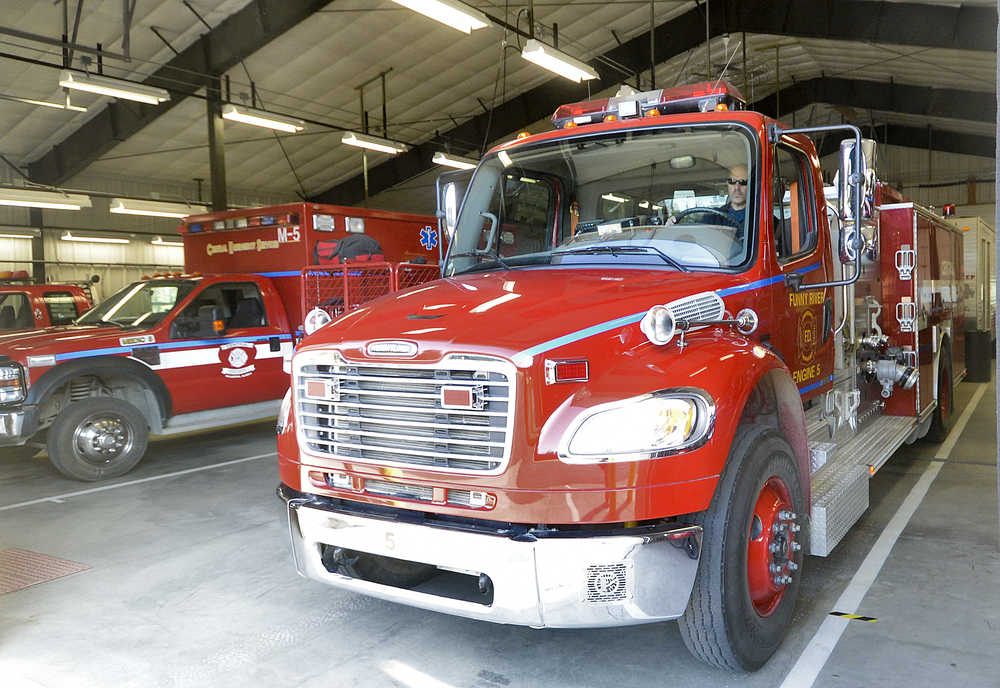
Photo by Rashah McChesney/Peninsula Clarion Central Emergency Services firefighter Sam Evanoff runs through his morning routine at the Funny River Fire Station on May 1, 2014 in Funny River, Alaska. CES has struggled to maintain staffing at its () stations and Evanoff worked a shift alone at the remote station. The department recently launched a volunteer program which aims to triple its volunteer base and add more people on each shift to its outlying stations.
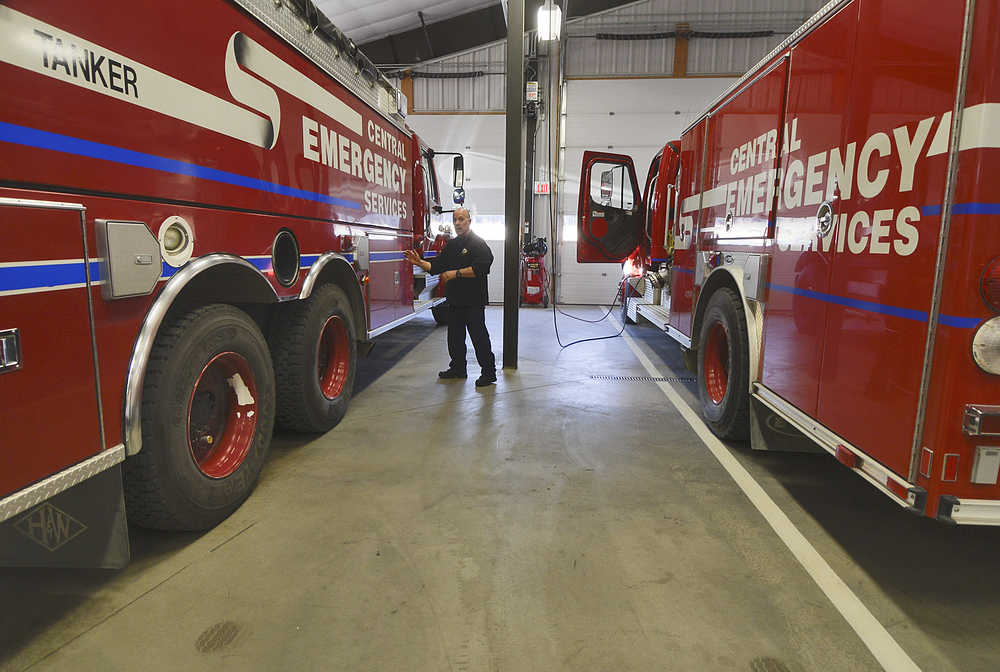
Photo by Rashah McChesney/Peninsula Clarion Central Emergency Services firefighter Sam Evanoff runs through his morning routine at the Funny River Fire Station on May 1, 2014 in Funny River, Alaska. CES has struggled to maintain staffing at its () stations and Evanoff worked a shift alone at the remote station. The department recently launched a volunteer program which aims to triple its volunteer base and add more people on each shift to its outlying stations.
