South Peninsula Hospital installs eICU unit
Published 3:54 am Sunday, June 19, 2016
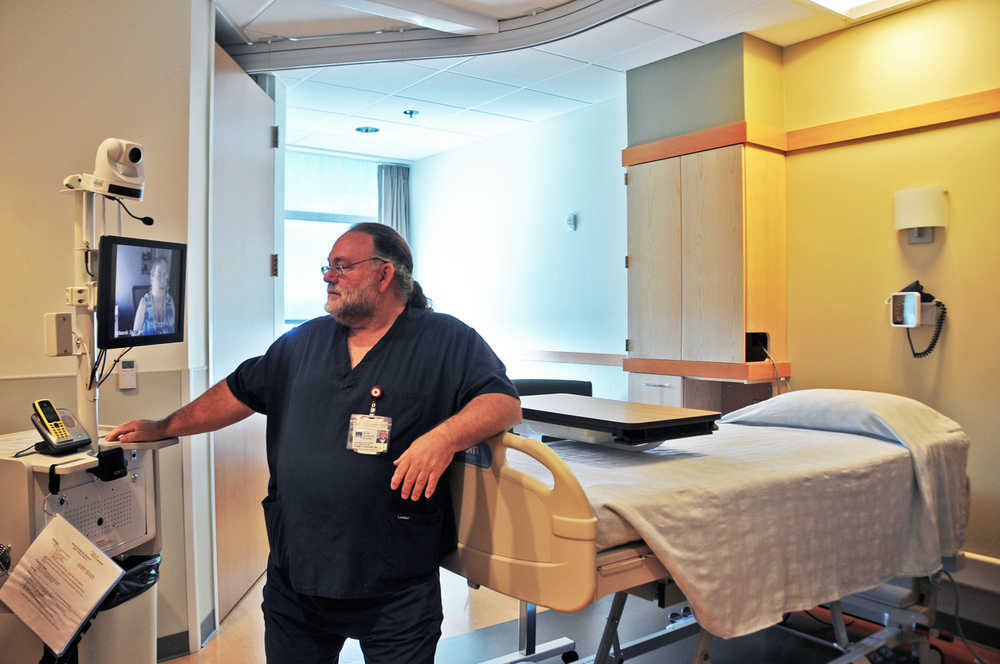
When patients arrive at the emergency door of South Peninsula Hospital in Homer, they could be getting treatment from medical professionals in Anchorage.
Because of the severity of some cases, be it a wound or an illness, the hospital has had to ship patients out immediately to Anchorage or Seattle for urgent care. At 118 air miles to Anchorage, the cost, time and risk of moving patients can be significant. Even if South Peninsula Hospital cannot immediately perform the procedure the patient may ultimately need, with the help of a camera and secure internet connection, the doctors and nurses there will now get a little more time to take care of a patient before moving them, if they even have to.
The hospital recently installed an eICU system, which connects it directly to a facility at Providence Alaska Medical Center staffed with intensivists — physicians and nurses trained in intensive care — who can offer advice.
In reality, the hardware is little more than a video camera, screen, speaker and microphone mounted on a rolling cart, but the connection gives the physicians and nurses at South Peninsula Hospital another opinion and expertise that may not be available on-site when a patient comes in.
The connection takes a few seconds, said Kenny Rogers, emergency department manager at South Peninsula Hospital. Rogers previously worked in a hospital near St. Louis that was equipped with remote surgical equipment, sometimes calling in to surgeries as far away as Iraq, and has worked with an eICU system before.
“It’s a good real-time backup resource,” Rogers said. “When the system goes into effect … they will actually remote in every hour and scan the room to check on the patient in addition to what our nurses are already doing.”
Resources are limited for South Peninsula Hospital, a public 22-bed hospital funded by property taxes of those in the South Kenai Peninsula Hospital Service Area, which stretches from the southern tip of the peninsula north to the Clam Gulch Tower near Mile 119 of the Sterling Highway. The hospital relies in part on commuting physicians from Anchorage, which is expensive, and attracting full-time specialists to a rural community like Homer can be both difficult and expensive.
Using the eICU means some patients may not have to pay the cost to be transported to Anchorage at all, or if they are, the South Peninsula Hospital staff can stabilize them first. The physicians and nurses on the other end of the line in Anchorage are able to see the patients through a rotating camera, scan the room, ask questions and hear audible signs and symptoms, like if a patient is wheezing, Rogers said.
The hospital currently has one unit, but it is mobile — it can be wheeled from room to room because it’s connected to a secure WiFi bandwidth. Physicians can also use the phone attached to the cart to call their counterparts in Anchorage if they want to have a more private conversation than over the monitor, Rogers said.
“One of the things that’s paramount in medicine across the board is collaboration and consultation,” Rogers said. “It’s not uncommon — we bounce stuff off one another all the time. It’s a good safety net for our patients to make sure that we have the resources readily available and aren’t making 30 phone calls. It’s the push of a button.”
South Peninsula Hospital joins a growing corps of hospitals using telehealth services. The American Hospital Association found the lack of on-site physician specialists available for 24-7 emergency department consultation in community hospitals is fairly common. Some community hospitals have been able to reduce costs by using telehealth for emergency services, according to an April 2016 policy brief from the American Hospital Association.
The addition of the eICU is one of a group of changes the hospital is moving into as part of health care reform. In recent years, the hospital has also expanded into primary care, behavioral health and a number of specialties not available in many small communities — a full-time OB/GYN, functional medicine, and soon, a dermatologist.
The Homer Medical Clinic, which the hospital purchased in 2014 and hopes to expand if the voters in the service area approve a $4.8 million bond sale to support the expansion on the regular election ballot this fall, is also in the process of applying to become a Patient-Centered Medical Home. The designation indicates that the clinic serves as the central location for a patient’s health, coordinating all their specialty and hospital visits as well as communicating with patients and their families.
The numbers reflect the growth in outpatient services. Between March 2015 and March 2016, outpatients visits grew by approximately 15.8 percent, according to the most recent quarterly report from the hospital, which CEO Bob Letson delivered to the Kenai Peninsula Borough Assembly at its June 7 meeting.
Derotha Ferraro, spokesperson for the hospital, said the board has been forward-thinking about the hospital and community’s needs for services. The first big step toward attracting more specialists and services was the hospital’s partnership with Homer Medical Center, incorporating family practice and primary care and moving toward the Patient-Centered Medical Home model.
“If you look at the variety of specialists now that we have regularly providing services here compared to just three or four years ago, it’s really markedly different,” Ferraro said. “But again, it’s with the concept of providing all your care kind of right here.”
At the same time, the hospital is being asked to evaluate potential savings.
The borough’s Healthcare Task Force recently asked the operating boards of Central Peninsula Hospital and South Peninsula Hospital to coordinate some of their functions, like purchasing contracts, to find savings.
The boards did so and the hospitals will try to order supplies together in the future to get better prices as well as hosting joint meetings a few times each year, Central Peninsula Hospital CEO Rick Davis reported to the Healthcare Task Force at its June 2 meeting.
There is also discussion in the borough about potentially aligning the two hospitals more closely, or possibly combining two the service areas. A recent ordinance that would move the hospital service area boundary south, removing some of the tax base from South Peninsula Hospital, has some residents asking whether it would be better for the two service areas to unify and have one mill rate levied across the borough rather than an approximately 2.3 mill levied on those in the South Kenai Peninsula Hospital Service Area and a .01 mill levied on those in the Central Kenai Peninsula Hospital Service Area.
Ferraro said the operating board is open to discussions of how the two hospitals can work together to achieve savings.
“The hospital leadership is absolutely open to aligning with Central (Peninsula Hospital),” she said. “(The leadership) totally sees the advantages to that, and we are ready to dive in and do what’s necessary to align, because that is the survival and success for the future.”
Framed against walls throughout South Peninsula Hospital are paintings, stained glass and small signatures contributed by area residents. Just after Rogers arrived last year, the hospital worked with the state on an emergency drill, and community members leaped at the opportunity to volunteer for it. Community support for the hospital is evident in Homer, he said.
“I’m used to hospitals participating and to agencies participating, but never to the level that (the community) did,” Rogers said. “Which is really comforting for someone like me, if there is a huge disaster, when it does occur, that I’ve not only got the people of the hospital to rely on, but I have a lot of community members out there that will come help as well.”
Reach Elizabeth Earl at elizabeth.earl@cmg-northwest2.go-vip.net/peninsulaclarion.