Jim Bridger: The man, the myth, the legend
Published 3:13 am Friday, February 12, 2016
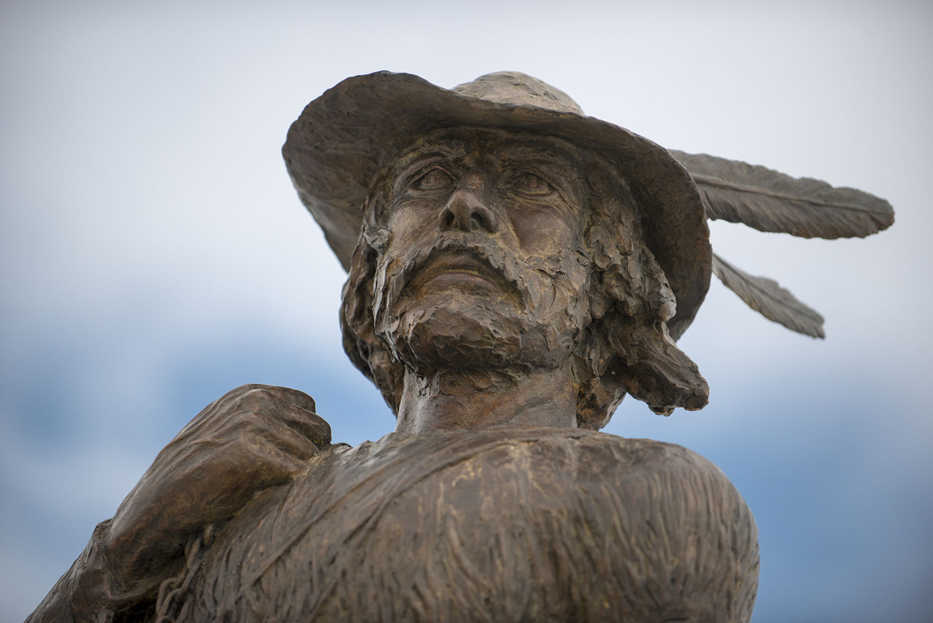
BOZEMAN, Mont. (AP) — For a 19th century mountain man, Jim Bridger has been getting a lot of attention these days.
Depicted in the Oscar-nominated film “The Revenant,” directed by Alejandro Gonzalez Inarritu and based on the book by Michael Punke, a teenage Bridger plays a naive trapper immersed in a world of ruthless men and mountains on the Western Frontier.
Inarritu’s sweeping vision of the American West plays a central role in the “The Revenant.” Though much of the filming was completed in British Columbia, the stark landscapes will ring true for any viewer that has delved into Montana’s backcountry.
Among the earliest of those explorers was Bridger, for whom the mountains looming north and east of Bozeman are named. Bridger’s mark on Montana winds across the land like the wagon trains that followed him, but how much is really known about the man? Who did the young trapper portrayed in “The Revenant” become?
James Felix Bridger was born on March 17, 1804, in Richmond, Virginia. His father, Patrick Henry Bridger, was a land surveyor and a farmer. Bridger’s mother operated a highway inn that catered to travelers.
In 1812, the Bridger family sold the farm and inn and moved west to a farmstead near St. Louis. The town was in its infancy in the early 1800s, but provided a healthy amount of work for Patrick Henry. The country was not as kind to Bridger’s mother, who was confined to the home in the winter of 1815 and died during the heat of summer of 1816. That winter, Bridger’s youngest brother would join his mother in death. Heartbroken, Patrick Henry died in the summer of 1817.
At the age of 13, Bridger was forced to seek any kind of employment he could find. Adept with a paddle, Bridger began trapping from his canoe along the river near the family farm. The spirit of adventure that the river exposed him to would grip his spirit and develop a drive that would lead him West.
In 1822, Bridger, at the age of 17, was hired to support General William Ashley’s Upper Missouri Expedition. It was on Ashley’s expedition that Hugh Glass — the central character in “The Revenant” — was brutally mauled by a grizzly bear. Bridger and fellow party member John Fitzgerald would volunteer to stay with Glass until his death but abandoned him after an attack by Arikara Native Americans. Glass would survive and seek revenge. In what would become a recurring theme in Bridger’s life — through cunning, luck or otherwise — Bridger was spared Glass’ wrath.
Following the Upper Missouri Expedition, Bridger would become among the first white men to set eyes on the Yellowstone region. During the winter of 1824-1825, Bridger set out on a trapping expedition north of Wyoming’s Teton Range.
“Bridger, with a small party, followed the Snake River to its very source, and wandered around for some time in what is now known as Yellowstone National Park; and he evidently became fascinated with the wonders of the country,” Charles G. Coutant wrote in “History of Wyoming.”
Bridger led the party over Sylvan Pass to the Grand Canyon of the Yellowstone River. He was struck by the warm waters of the Firehole River, the expanse of Yellowstone Lake and the unusual extrusion of Obsidian Cliff. His descriptions of the region’s hissing fumaroles and spouting geyser were dismissed by many fellow trappers, but as more and more explorers visited the area his stories became fact.
Later in 1825, Bridger would become the first explorer to taste the waters of the Great Salt Lake in present-day Utah. He believed the lake may have been an inlet of the Pacific Ocean.
The following year, Bridger traveled north through Yellowstone. He followed the Yellowstone River, eventually making his way by the present-day mountain range that bears his name. His party headed west to the headwaters of the Missouri River near Three Forks. It was on this expedition that Bridger may have met Robert Meldrum of John Jacob Astor’s American Fur Company.
Four years later, in 1830, Bridger and several other trappers would purchase the Rocky Mountain Fur Company from Bridger’s former employer William Ashley. Bridger’s involvement in the fur trade would lead him on expeditions across the West and he acquired an intimate and rare knowledge of the land and the Native Americans that inhabited it. He learned to speak in several native tongues and married his first wife, a Flathead Indian woman, in 1835, with whom he had three children.
In 1843, Bridger and his partner, Louis Vasquez, established a trading post on the banks of the Blacks Fork of the Green River in Wyoming. Later named Fort Bridger, the post would serve the wagon trains and settlers heading west on the Oregon Trail.
After the death of his first wife in 1846, Bridger would marry the daughter of a Shoshone chief, who bore him three more children. She died in childbirth in 1849. Bridger married again in 1850, this time to Shoshone chief Washakie’s daughter. The couple would have two more children.
As the Oregon Trail continued to see increased use, Bridger, in 1850, sought a more direct route. He pioneered a trail over what would become Bridger’s Pass, which reduced the distance of the Oregon Trail by 61 miles. Bridger’s route was later used by the Union Pacific Railroad, and modern observers will recognize it as Interstate 80.
The discovery of gold in 1863 at Virginia City’s Alder Gulch brought waves of pioneers hoping to strike it rich. The Bozeman Trail led to the gold fields, but was notoriously dangerous, passing through lands treatied to the Sioux. The Bridger Trail, established in 1864 offered a safer alternative.
“The Bridger Trail went west of the Big Horn Mountains and passed through what is Bridger, Montana, the town southwest of Billings,” Rachel Phillips of the Gallatin History Museum said Wednesday. “Then the trail went up the Yellowstone River and the Shields River by Wilsall, and over the Bridger Mountains.”
Phillips said Bridger’s name now appears on many landmarks and place names in Montana, but that the history of how those names came to be adopted is hard to know.
“A lot of place names have Indian origins and a lot were named for early explorers like Jim Bridger and John Bozeman,” Phillips said, “people that made their mark on the area early on.”
Bridger’s health began to fail him after serving as an army scout during the first Powder River Expedition against the Sioux and Cheyenne in northern Wyoming. He left the West for his boyhood home in Missouri in 1868, suffering from goiter, rheumatism and other ailments. Bridger died near Kansas City, Missouri, on July 17, 1881.
Known during his lifetime for embellishing some of his tales, Bridger’s stature and status as a mountain man surely grew following his death, but his influence on Montana and the American West cannot be overstated.
“Lots of things are named for Bridger — Bridger, Montana, Bridger Creek — he came out West to be a fur trapper and looking for adventure,” Phillips said.
He found it.