
It happens every year like clockwork. May 4 rolls around and for 24 hours my Instagram, Facebook and Twitter feeds are clogged with “May the Fourth” jokes in celebration of the Star Wars franchise. I like Star Wars as much as the next person, but it’s hard for me to remember sometimes that the franchise was genre-defining when it hit the big screen in 1978.
Too frequently, additions to the science fiction canon feel formulaic, with familiar settings, characters and alien lifeforms. While the sci-fi fanatics out there may gasp at hearing I often conflate characters and plots from Star Wars, Star Trek, Battlestar Galactica and Stargate, something about stories where spaceships move through space feels a tad derivative.
Imagine my surprise, then, when I devoured a short novel about a spaceship in outer space last month.
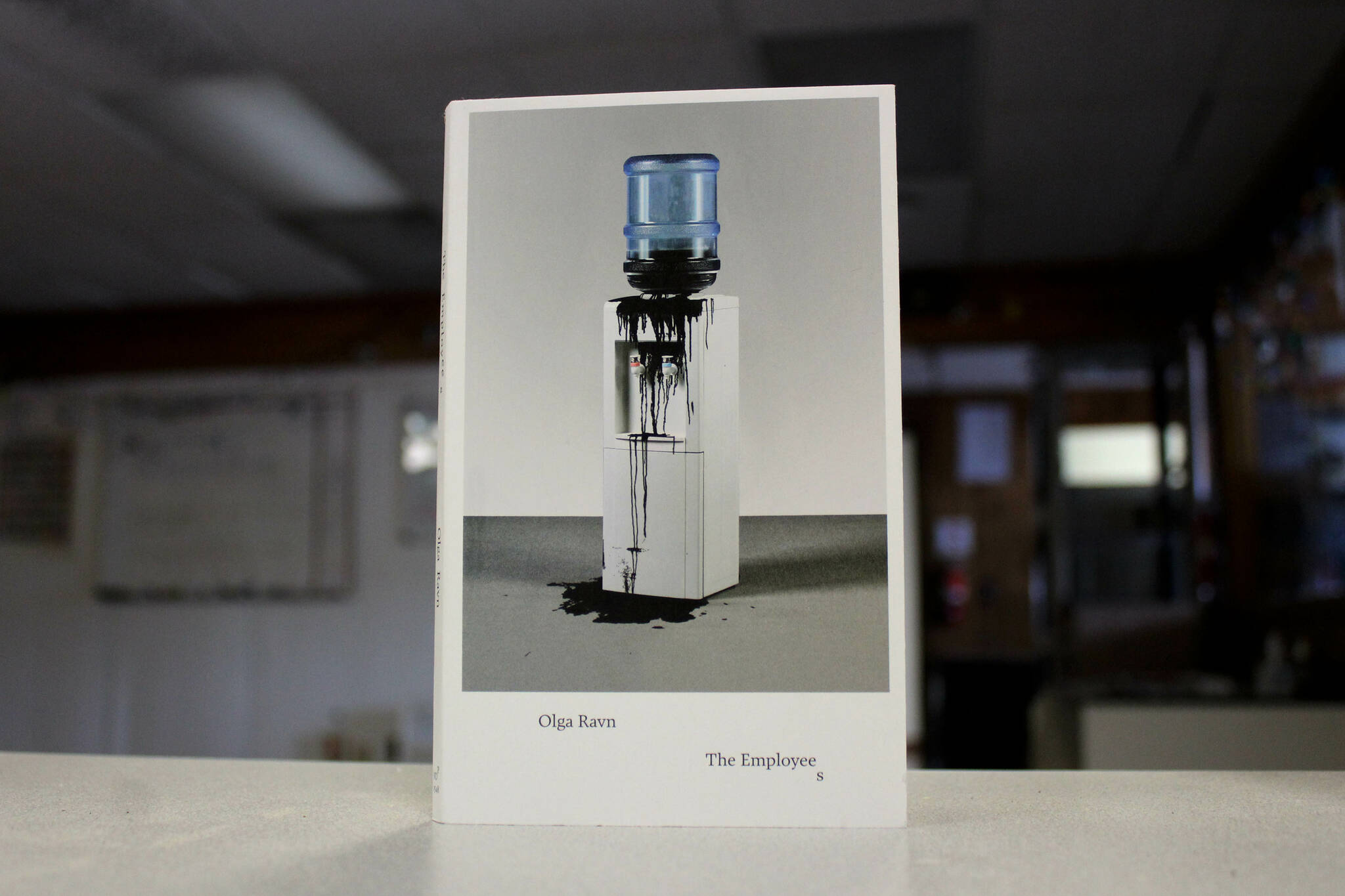
“The Employees” tells, through a series of statements, the experience of staff members on the space vessel Six Thousand Ship, which is in orbit around the planet New Discovery. Tensions build between the ship’s human and humanoid workers after crew members start to bring back strange objects from New Discovery.
There aren’t a lot of writers who can tell a nonlinear narrative well, but Ravn knows what she’s doing. The brevity of each statement allows readers to more clearly see through lines between each while never getting bored with one particular perspective. The structure felt familiar to me as a reporter: a group of people give me their perspectives and I have to make sense of them and find the story.
The book puts readers in a position of omnipotence that allows them to see the full picture despite most of the book being written as discrete statements. Unlike other texts written in the first person, I didn’t feel trapped in any one person’s perspective and instead got to marinate in a kind of dramatic irony that can be difficult to do well.
The statements vary in length, some reading only a couple of sentences and others as long as a couple of pages.
“I know you say I’m not a prisoner here, but the objects have told me otherwise,” is the entirety of one statement, for example.
Ravn told London publisher Lolli Editions in 2021 that the book was inspired by the installations and work of Lea Guldditte Hestelund, a Danish artist for whom Ravn briefly worked. Ravn said Hestelund approached her about part of the program for one of her exhibitions. That assignment spiraled into “The Employees.”
Shared between Hestelund and Ravn, Ravn said, was an interest in life and things that are alive but not human. The key source of tension in “The Employees” exists between the Six Thousand Ship’s human crew members, its humanoid crew members and the objects. The humanoid staff look like humans, but don’t act like humans. The objects act like humans, but don’t look like humans.
How is a human to make sense of it all?
Many passages are deeply cerebral. They activate the senses while challenging how useful those senses are in accurately understanding the world in which we live.
“Since I was brought here I’ve been convinced that I’m dead, but that in my particular case they’ve made an exception and allowed me to stay in the simulation,” reads one statement. “I’m like a plant where everything’s withered away apart from a single green shot that’s still alive, and this shoot is my body and mind, and my mind is like a hand, it touches rather than thinks.”
After looking at pictures of Hestelund’s exhibits, something in my mind clicked. Suddenly I understood what characters in “The Employees” were talking about. There’s something surreal and subversive about her pieces. A passing glance reveals a pang of something human, which I interpreted to spark the downfall of the Six Thousand Ship crew in “The Employees.”
“Employees” was originally published in Dutch as “De ansatte” by Gyldendal Group Agency. The book was translated in 2020 by Martin Aitken and published by Lolli Editions in the United Kingdom.
Off the Shelf is a bimonthly literature column written by the staff of the Peninsula Clarion that features reviews and recommendations of books and other texts through a contemporary lens.
