
This is a developing story.
A breakthrough agreement by the Alaska Legislature on an education bill that includes the first major permanent funding increase since 2016 — and seemingly enough votes to override a veto by Gov. Mike Dunleavy — hit a temporary snag Monday due to a drafting error lawmakers said they expect to correct by Wednesday.
House Bill 57, which originated as a bill placing limits on students’ cellphone use at school, now contains a broad range of additional provisions including a $700 increase in the statutory $5,960 base student allocation. It passed the Senate by a 19-1 vote at midday Monday, with legislative leaders in both the majority and minority expressing strong support in the compromise package after being sharply divided since the session began in January.
However an afternoon concurrence vote by the House was canceled due to what essentially is a legal glitch involving a single word, where “may” rather than “shall” applies to a specific provision. The bill was returned to the Senate where a re-vote on a corrected version and then final passage by the House is expected Wednesday.
The quick action on HB 57 occurred after the Legislature failed by a 33-27 vote last week to override Gov. Mike Dunleavy’s veto of a $1,000 BSA increase. Legislative leaders say the goal is passing the new bill with enough time left in the session for another override vote — and having the necessary 40 lawmakers in favor — if Dunleavy takes the full 15-day period allowed before a veto. The session is scheduled to adjourn May 21.
An education funding increase has been a top priority of Democratic and many moderate Republican legislators in recent years, who argue years of relatively flat funding have severely impaired school districts due to inflation. Dunleavy and minority caucus Republicans have stated they instead favor policy reforms — some of which involve more funding — such as expanding charter and home school programs, offering teachers retention bonuses and allowing students to enroll in any district statewide regardless of their hometown.
The version of HB 57 passed by the Senate on Monday contains some policy measures sought by Dunleavy and minority Republicans including increasing student transportation funding by 10%, easing regulations for forming new charter schools, and providing incentives to districts meeting reading standards goals. An amendment adopted Monday also establishes an education task force to review education funding levels and open enrollment policies.
“I am quite excited that we had such a great showing of legislators supporting a significant increase,” Sen. Löki Tobin (D-Anchorage), chair of the Senate Education Committee, said after the floor session, “And I look forward to continuing the dialog with my colleagues about how we enact educational reforms that help every student across the state.”
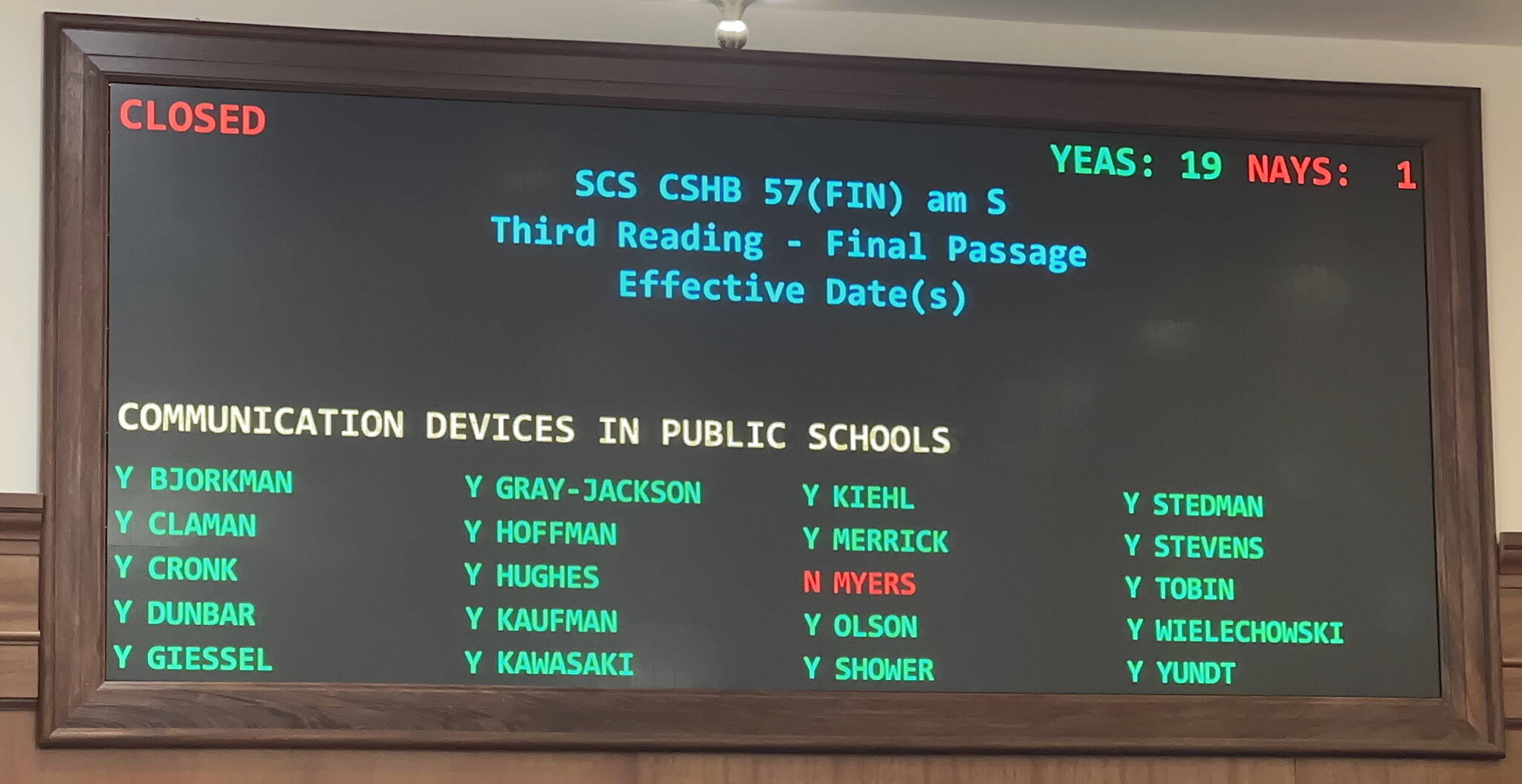
The Alaska Senate passes an education funding and policy bill by a 19-1 vote on Monday. (Mark Sabbatini / Juneau Empire)
House Minority Leader Mike Shower (R-Wasilla) said the revised HB 57 doesn’t have all the policies sought by Republicans in the legislative minority caucuses and Dunleavy. But he said it does contain an acceptable level of policy and an affordable level of funding.
“I’m going to commend the members of the minority that I think have literally pulled a rabbit out of a hat to make this work,” he said during a press conference after the vote.
The lone dissenting vote was cast by Sen. Robert Myers (R-North Pole).
However, some members of the Senate minority caucus said Monday they will be keeping an eye on certain provisions in HB 57 — as well as other legislation being considered during the final weeks of the session — before determining if they will indeed vote to override a veto by Dunleavy if necessary.
Among the items under scrutiny is an incentive for districts of $450 for each student in kindergarten through grade six that reads at or above grade level, or demonstrates improvement. Funding for the incentive is contingent on passage of a bill — which passed the Senate earlier this month and is pending in the House — requiring companies to pay state income taxes on Alaska-related transactions even if the businesses are located outside the state.
Myers told the Alaska Beacon his concern about lack of certainty of that provision is a key reason he opposed the bill.
The House passed the $1,000 BSA increase bill by a 24-16 vote, with three Republicans in the minority joining the Democratic-led majority. Lawmakers in both parties said they expect a considerably higher level of support in the House when members vote on the revised bill with the $700 increase.
Dunleavy did not immediately indicate Monday if he will veto the bill, and legislators in the majority and minority caucuses who have talked to him in recent days said they are uncertain of his intentions.
• Contact Mark Sabbatini at mark.sabbatini@juneauempire.com or (907) 957-2306.
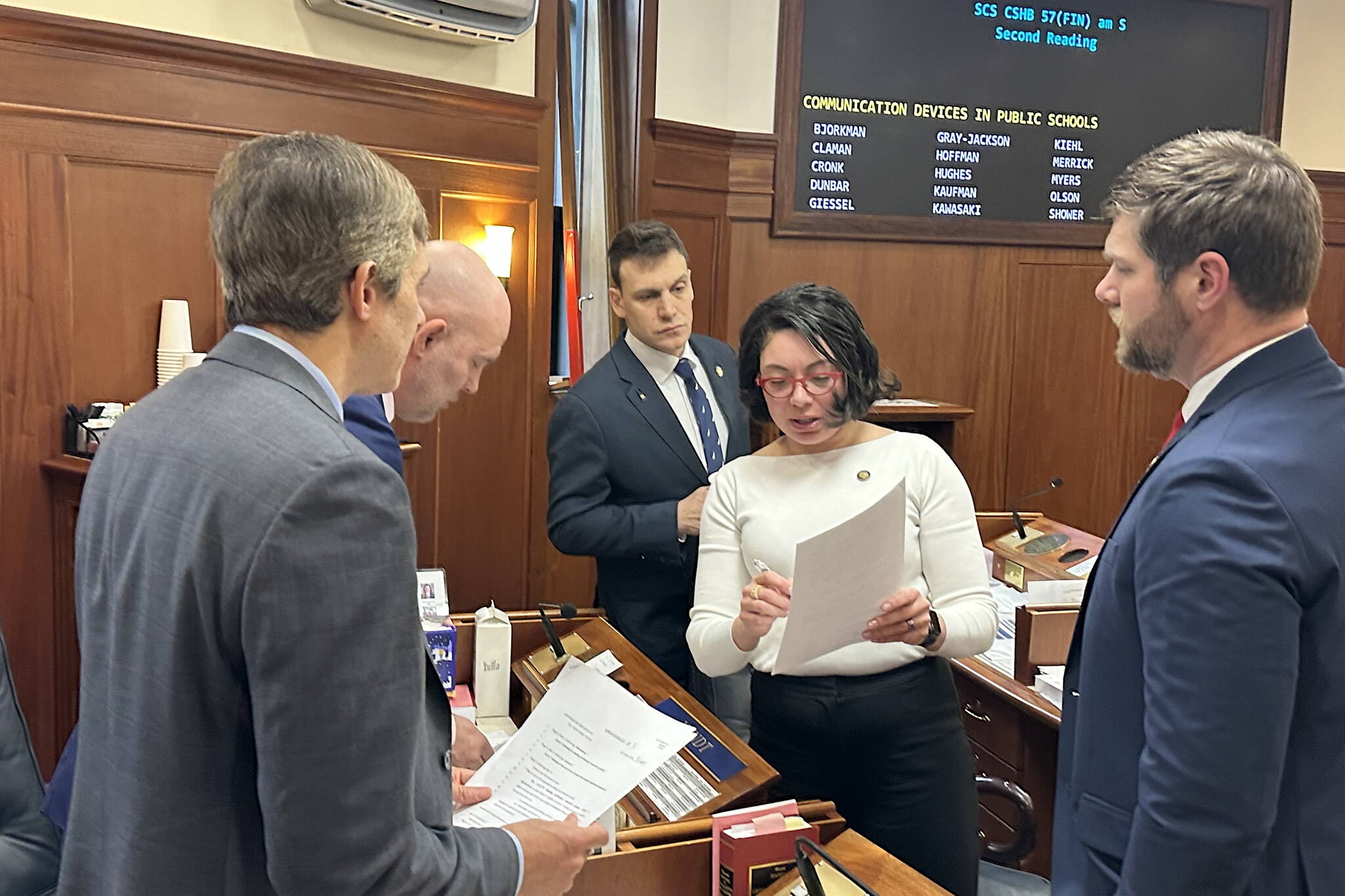
State Sen. Löki Tobin (D-Anchorage) reviews an amendment on an education bill with other senators during a break in floor debate Monday at the Alaska State Capitol. (Mark Sabbatini / Juneau Empire)
